

Rural Nebraska faces a double challenge: a dwindling young population drawn to big-city life and a critical shortage of healthcare workers. The Kearney Health Opportunities Program at UNK is working to combat this issue, equipping local students with the skills to become healthcare professionals and inspiring them to build their careers close to home.
Peggy Abels, director of Health Sciences at UNK, said KHOP begins outreach as early as seventh grade, showing students ways they can have a meaningful career in healthcare while making a difference in their hometowns.
“We developed a program called ‘Health Science Explorers’ about five years ago that is designed to work with students in 7th through 12th grade to start building that pipeline,” Abels said. “KHOP is often referred to as a pipeline program, but we realized we really need to be more intentional about the front end of the pipeline. How do we get students from middle school and high school excited about healthcare and teach them about the different healthcare careers that are available?”
Youth flight
Many young Nebraskans move to cities for better job prospects and a different lifestyle. A study from the University of Nebraska-Lincoln found that 69 out of the state’s 93 counties had a population decline due to outmigration, particularly among young adults. This phenomenon, known as the youth flight, weakens local economies and leaves fewer people to sustain small communities.
“That Explorers program is huge with helping us recruit for KHOP,” Abels said. “It’s recruiting us a better and better group each year because they know what they want to do and they are knowledgeable about the healthcare professions.”
The departure of young people worsens another crucial issue: the shortage of healthcare workers in rural Nebraska. A University of Nebraska Medical Center report shows that while the number of nurse practitioners and pharmacists has increased slightly, rural areas still struggle to recruit doctors, nurses and specialists. This shortage is intensified by the fact that many current healthcare providers are nearing retirement age.
More than a third of Nebraska’s population lives in rural areas, where hospitals and clinics are scarce. Many residents must travel long distances for medical care, making it necessary to train and retain healthcare workers within rural communities. This is where KHOP steps in.
KHOP’s role in rural communities
KHOP was launched in 2010 as a partnership between UNK and UNMC to encourage students from rural Nebraska to pursue careers in healthcare and return to serve their communities. The program offers scholarships, mentoring and hands-on experiences in rural healthcare settings, creating a pipeline of local providers committed to staying in Nebraska.
KHOP supports students in various medical fields, including medicine, dentistry, pharmacy and nursing. Beyond financial assistance, the program prepares students for real-world healthcare challenges, keeping them connected to their roots and encouraging them to return home after completing their education.
“It’s not just a scholarship and going to UNMC, it’s almost like a professional student organization,” Abels said. “We do group events four to five times a semester, all of the freshmen live in a learning community and we go on field trips to different hospitals to rural facilities, as well as UNMC. We want them to start making those connections early.”
On the fifth floor of the west Centennial Towers residence hall, the learning community offers students a supportive environment where they live alongside others who share their passion for healthcare. In addition to their school work, students participate in regular hospital visits, gaining firsthand experience in a variety of medical settings. They also attend networking events that connect them with healthcare professionals and potential mentors, helping them build relationships and professional skills early in their academic journey.
Giving back
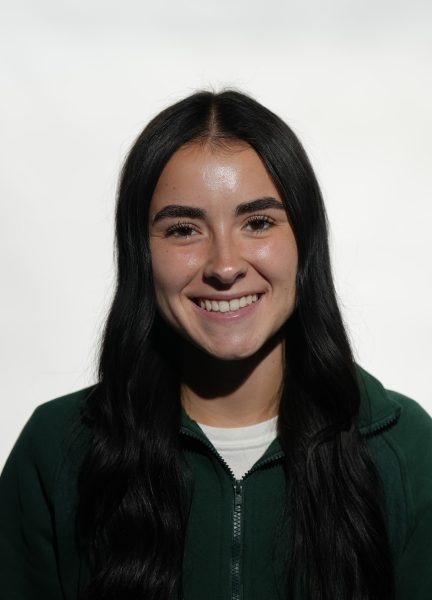
For many students, KHOP is a pathway to fulfilling their career aspirations while giving back to their communities. Addie Karo, a KHOP student from Atkinson, is one example.
Karo is a sophomore majoring in biology with a health science emphasis on the pre-medicine track. Her goal is to complete medical school at UNMC and enter a rural family medicine residency program before returning to a rural Nebraska community.
Karo’s passion for healthcare stems from a deeply personal experience. As a child, she spent significant time in doctors’ offices for various health issues. In fifth grade, she fell gravely ill with an unknown condition that left her unable to walk, talk or eat.
After multiple hospital stays and extensive testing at Children’s Hospital in Omaha, specialists from across the country were consulted, yet she received no answers. It wasn’t until her third hospitalization that a hospitalist from Children’s diagnosed her with amplified musculoskeletal pain syndrome, a chronic condition that amplifies pain signals within the nervous system.
“When I was diagnosed, I was told I will have it for the rest of my life and there’s no cure,” Karo said. “When I was going through all of these pain cycles, they were pumping me with morphine and narcotics and oxycodone, and none of it touches my nervous system. My wiring in my body is just messed up. It will never be the same.”
Karo encountered numerous doctors and specialists who supported her recovery. Their guidance helped her navigate therapy, regain basic functions and cope with the chronic pain that still affects her daily life.
“Through all of that, it was the doctors that coached me through it,” Karo said. “I think that without my Children’s team, I would not be where I am today.”
Her experience inspired her to pursue medicine, with the goal of bringing specialized care to rural Nebraska so that families like hers won’t have to travel hours for treatment.
“I think that it is devastating that we require people to drive five hours to receive this type of care,” Karo said. “My goal is to cut down on that and be accessible while still providing quality care in small towns.”
Karo plans to return to a rural community because she understands firsthand the difficulties of accessing healthcare in small towns. She recalls having to drive four hours to reach a hospital emergency room, as well as traveling even farther for specialized care and mental health support.
“That is where I see myself fitting into the puzzle,” Karo said. “Being that missing piece for rural communities like I grew up in, so we can bring that care outside of Omaha and Lincoln.”
KHOP’s growth
KHOP has grown significantly since it started, expanding from a focus on pre-med students to include 11 different healthcare fields. This expansion helps address a wide range of healthcare needs in rural Nebraska.
KHOP also collaborates with rural hospitals and clinics to provide students with hands-on training. These partnerships help students build professional connections in their hometowns, increasing the likelihood that they will stay after graduation.
Looking ahead, KHOP leaders want to reach even younger students and strengthen its ties with rural healthcare providers. By doing so, the program hopes to inspire more students to pursue healthcare careers and remain in Nebraska.
“The more we can alleviate the rural healthcare shortage, the better,” Abels said. “Nebraska is going to be short of over 5,000 nurses just in 2025 – that’s the level of the shortage. So we need to make sure we are getting these students back to rural Nebraska so we can have enough providers.”
Targeted educational programs like KHOP serve to address difficult community issues. By giving students a reason to stay, KHOP is combating youth flight and ensuring rural Nebraska has the healthcare professionals it needs. The goal is that by supporting local students and encouraging them to return home, it will help sustain and strengthen Nebraska’s rural communities for generations to come.
“You can’t teach someone to live in a small town,” Karo said. “I think it’s important that us students from rural communities go back and help provide care that is needed.”